
Human vs. AI in Design: Who Really Creates Better Art?
Design is changing more rapidly than ever before, and with the introduction of AI, there has been an argument. Will machines be able to produce art that would be the same as the creativity of human beings? The AI tools are creating designs at the speed of light, starting with digital drawings and logos, to generative graphics. Nevertheless, emotion, intuition, and cultural knowledge are added to the projects by human designers, which algorithmic models cannot easily emulate.
These two opposing forces of human creativity and AI are discussed in this blog, with their advantages and disadvantages, and examples of these forces in reality. By the end of this, you'll find out whether the artistry is with humans or AI algorithms or a combination of both.
- The Rise of AI in Design
- How AI Generates Art
- Benefits of AI in Design
- Examples of AI-Generated Design
- Human Creativity in Design
- Ability to Conceptualize Abstract Ideas
- Examples of Human-Made Art
- Situations Where Humans Excel Over AI
- Head-to-Head Comparison: Human vs. AI
- The Future: Humans and AI Working Together
- Conclusion
The Rise of AI in Design
The A.I. revolution has produced tools that have never been more accessible and quicker to use in design, thus changing the world of design. AI tools such as MidJourney and DALL·E enables designers to create high-end digital art by entering simple text. Canva AI is a visual creation tool designed to enable marketers and small businesses to make visuals in a user-friendly system, which incorporates AI.
In the meantime, Adobe Firefly provides AI-based capabilities in the Adobe suite that allow designers to improve the image, remove the background, and create content with a few clicks. A combination of these tools is changing the way design work is done, as both professionals and amateurs can create work that is aesthetically appealing and within a very short time period.
How AI Generates Art
AIAI-generated design is based on a number of fundamental technologies that collaborate to create images and graphics:
Algorithms: AI is a system that converts inputs into a visual form with the use of mathematical rules and instructions.
Machine Learning: AI models use patterns, styles, and structures found in the existing artworks to generate their own works after studying the large volumes of existing art.
Pattern Recognition: AI can recognize patterns and repeated visual image information. Thus, it recreates styles or creates new combinations.
Iteration: AI will keep improving designs repeatedly, as per the feedback or modified parameters, resulting in a variety of the same idea.
Synthesis: The last step is the synthesis of the previously learned styles, colors, and textures using the AI in order to generate unique and brief artworks.
In this way, AI can respond to a simple prompt and generate complex and attractive outputs that used to require hours of human time to generate.
Benefits of AI in Design
Speed: AI is capable of creating superior quality designs within seconds, which greatly shortens the project durations.
Scalability: This allows the creation of many design variations at a time, thus simplifying the large project work.
Unlimited options: Designers can experiment with an unlimited number of styles, colors, and layouts, without the need to manually do it.
Cost-Effectiveness: AI minimizes the demand for large amounts of human labor, lowering the costs of businesses and freelancers.
Examples of AI-Generated Design
Logo Generation: AI is capable of generating unique logos using AI Logo Generator, which are founded on brand names, colour schemes, and themes.
Digital Art: One can produce illustrations, concept art, and marketing images at a high rate using text prompts.
Generative graphics: AI can create textures, patterns, and 3D models that can be utilized as a background or used as a component of a larger project.
Human Creativity in Design
Human design’s artistic aspect is a heterogeneous and multidimensional phenomenon, which cannot be fully reproduced by AI. The most important attributes that designers use include emotion, storytelling, intuition, and cultural awareness. The feelings make a human able to relate to the audience on a personal level and visualize emotions, which is attractive. The Intuition helps designers to make the right decisions, not by a strict rule, and allows them to think about strange ideas.
Storytelling is another significant factor; human beings are narrators. They form meaning and context, which communicate beyond words, or rather, it comes via design. Sensitivity to traditions, societal norms, and historical contexts makes the designs relevant and significant, which can be found through cultural awareness and discussed throughout communities. All these elements together allow human designers to produce not only beautiful but also beautiful pieces that touch the heart and become culturally relevant.
Ability to Conceptualize Abstract Ideas
One of the best things human designers can do is visualize things and translate them into real designs. An abstract concept, a feeling, or a philosophical concept can be used and turned into images to express a personal or brand story.
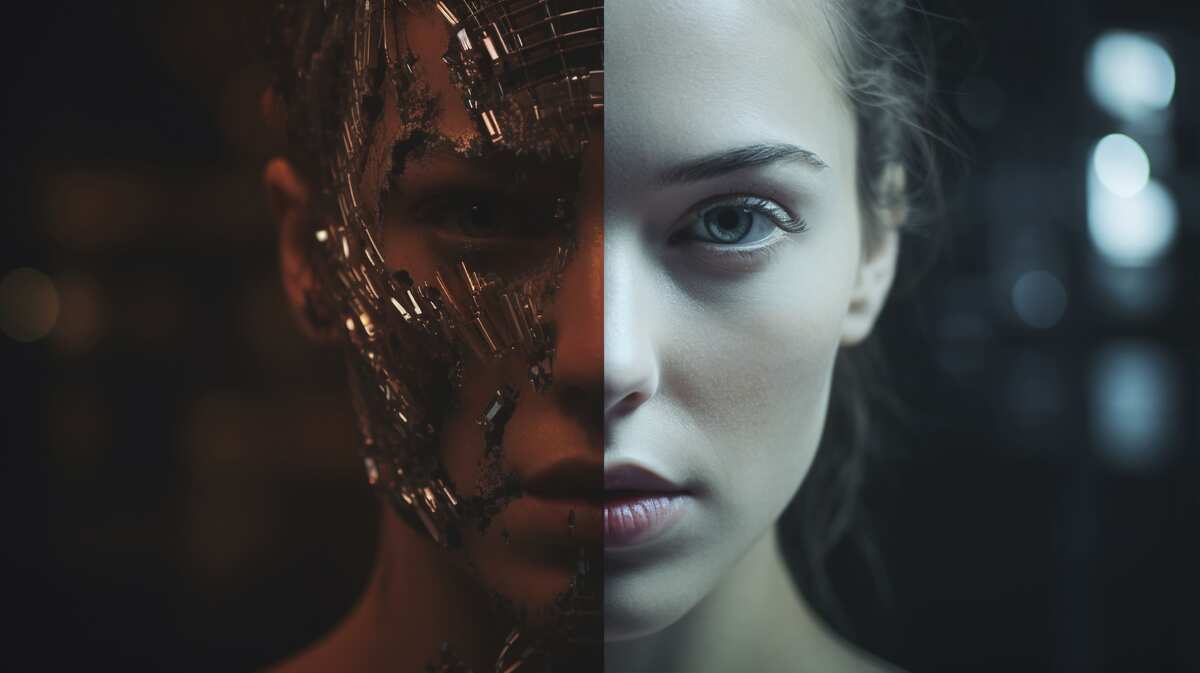
In contrast to AI, which works based on the patterns and available information, human beings have the opportunity to create completely new visual languages, experiment with symbolisms, and break the established design standards. This abstract thinking ability enables designers to produce a work that is distinctive, significant, and memorable. Through campaign branding, product packaging, and more, the human conceptual capability is such that design is not merely a decoration but a potent means of connection and expression.
Examples of Human-Made Art
Iconic logos: The logos of Apple, Coca-Cola, and Nike are iconic logos. The human mind designed these classic symbols.
Artistic Masterpieces: Paintings like the vision of the Starry Night of Van Gogh or the Guernica of Picasso as a personal emotion and social remark.
Drawing by hand: The book illustrations of children, editorial drawing, and custom typeface, which have a human touch and personal nature.
Situations Where Humans Excel Over AI
Emotional branding that causes empathy, nostalgia, or happiness.
Minor design elements such as color nuances, balance in composition, and typography.
Sensitive user experience and interface design frameworks based on real human behaviors.
The cultural and historical allusions are to be seen.
Head-to-Head Comparison: Human vs. AI
Humans and AI have distinct advantages and disadvantages when it comes to design. The knowledge of these differences can assist in explaining where they are best and where cooperation may be most productive.
Speed
Speed is among the most evident benefits of AI. Current artificial intelligence technologies are able to produce entire design ideas within seconds. An AI can create a logo, a digital drawing, or a poster, and a human graphic designer may use several hours (or days) to create one. The rate is suitable when it comes to rapid prototyping, brainstorming a list of ideas, or working under deadlines.
But somehow, human beings instinctively require more time because creativity is a process of thought, experiment, and error. Although it is slower, this process will enable human beings to dive deeper into thoughts and polish the subtle nuances that AI might not notice.
Originality
Originality is where humans often shine. Personal experiences, cultural awareness, and emotions are some of the things that human designers use. Every design holds a different view determined by the imagination and experiences that the designer has.
AI, on the other hand, produces art out of the existing data trends. It is capable of recombining styles and elements in ways of interest, but its creativity is eventually based on what it has already observed. This implies that AI is highly efficient at generating variations of familiar designs, but designs that are genuinely revolutionary and attract an emotional response are highly dependent on human intuition.
Flexibility
Flexibility is yet another divergence. Human beings are capable of adjusting to the evolving needs, testing unforeseen concepts, and making U-turns halfway through a project when they get an inspiration.
On the other hand, AI is constrained by inputs and prompts. Prompts are modifiable, but AI does not have the ability to automatically predict less obvious changes in the design objectives or understand nonverbal feedback in the way humans do.
Consistency
Consistency tends to favor AI. After the training is complete, AI will produce image outputs that are much more consistent, allowing it to handle large-scale work or a brand that needs consistent image production on multiple platforms.
Although human designs tend to be more loaded with personality, they inherently differ with every iteration, which can be either an advantage or a problem.
Collaboration
Collaboration remains a human stronghold. Designers will have a better comprehension of the vision of a client, be capable of transforming abstract concepts into images, and react to the feedback with sympathy and understanding.
AI requires clear and precise instructions. It is not able to guess the subtleties of preferences of clients or the peculiarities of the situation.
The Future: Humans and AI Working Together
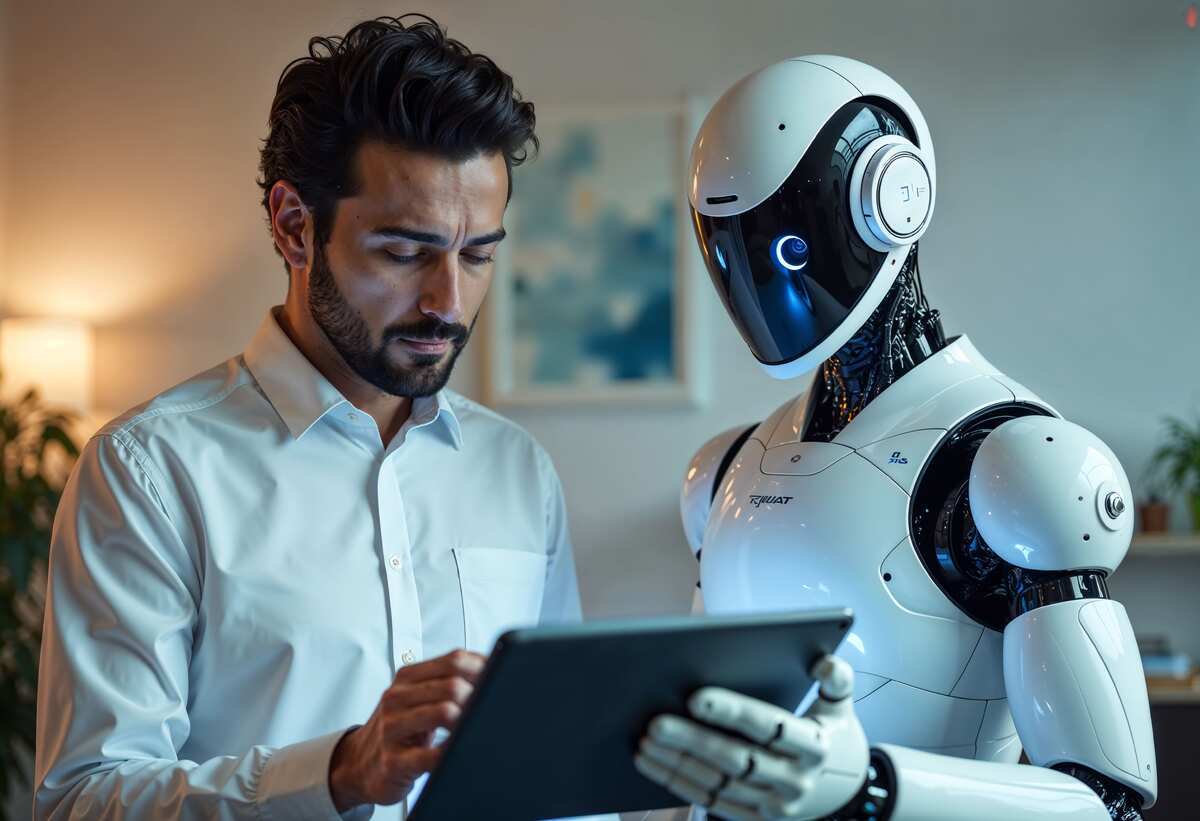
AI as a Creative Partner
The future of creativity is not between humans and AI; it is collaboration. AI can be used in ideation, speed, and structure, whereas humans are able to create emotion, intent, and judgment. Such a balance is what makes meaningful human-AI collaboration a reality and establishes the creative future.
Creativity, Guided by Humans
Although the process can be accelerated by AI, human beings will be at the core. The problems, such as excessive dependence on AI, ethics, and copyright, exist. With the appropriate tools, creators can be faster and at the same time be original, purposeful, and human.
Why X-Design Works for Everyone
X-Design was founded on a single philosophy: that great design can be affordable to everyone. To novice designers and business founders, it eliminates the fear of starting with a blank sheet of paper merely by providing cleverly designed, AI-assisted foundations of designs such as Business Card Maker that are customizable. To more established design teams, X-Design is a productivity companion. This speeds up the discovery process, the discovery of loops, and the arrangement of designs without limiting the capacity to develop.
Empowering Startups and Small Businesses
In the case of startup owners and small business teams, time and budget are never enough. X-Design fills that void by providing professional-quality design within a few hours. This enables the founders to quickly build their product, serve their customers, and expand their business. It is an AI-assisted product that can help with ambition without requiring enterprise resources.
Conclusion
The human vs. AI design debate does not have a simple answer. The speed, uniformity, and limitless potential of AI are supplemented by the human element of insight, emotion, and culture. The competition is not the ultimate goal, but rather collaboration, where AI can help come up with ideas, and humans can make it meaningful and impactful. The future of design does not involve the removal of human creativity but making it smarter with the use of intelligent tools. To get accurate results you must try an AI design agent!
Both have allowed designers to go to extremes, cross boundaries, and produce something that touches on a technical and emotional level, and that is what it means to make art now.