
What is the Difference Between Graphic Design and Animation: A Detailed Guide for Beginners
In the modern age, visual communication is more influential than ever. Graphic design and animation are among the most powerful art forms important for visual communication. They may look similar at first glance but they are very different.
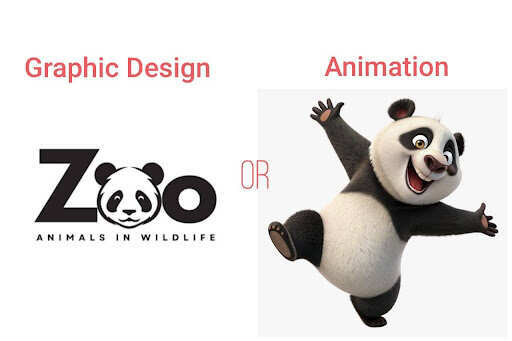
Graphic design focuses on content with still images, such as a brand name, poster or even logo but animation makes the image or idea come alive with motion and timing. Marketers, designers and businesses must understand the distinction in order to make the appropriate decision of the medium to convey their message. Let’s discuss in details.
- What is Graphic Design?
- What is Animation?
- How is Graphic Design Similar to Animation?
- Graphic Design vs. Animation: What is the Difference?
- Main Focus
- Workflow
- Visual Impact
- Visual Expression
- Media Type
- Applications
- Comparison Table
- Which One Should You Choose for Marketing?
- Which One Should You Choose as a Career?
- Conclusion
- FAQs
What is Graphic Design?
Graphic design or graphic art is the process of creating visual content by combining different elements. They are put together to convey a certain message. Graphic designs use special softwares and online tools to give life to specific ideas.
Since a graphic design has the ability to communicate messages in the simplest way possible, it is also known as a visual communicator. The elements that help a designer in serving this purpose include lines, typography, and shapes. Moreover, space, textures and scales are used to make a design more dynamic.
Graphic design has numerous examples around. Popular graphic designs include the designs on billboards, posters, banners and magazines.
What is Animation?
Like graphic design, the art of animation is creating pictures to tell a story. In animation, those images are enhanced with the illusion of motion through various techniques. As it moves, a rudimentary design transforms into an interesting visual story.
The main components of an animation are mostly characters, lifelike scenes, or objects. There are two common types of animation. They are 2D and 3D animation. A 2D animation has only 2 dimensions while a 3D animation also has depth.
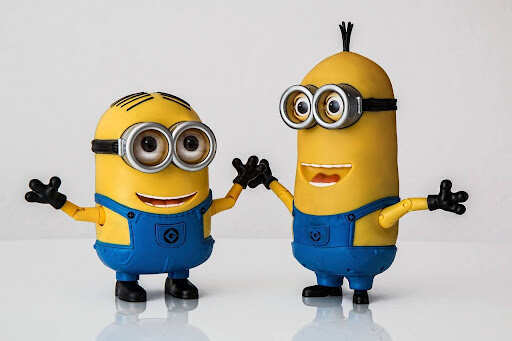
Examples of animation include Minions, Pokemon cartoons, and The Lion King.
How is Graphic Design Similar to Animation?
Graphic design may be confused with animation due to several reasons. These include:
Core Principles: Both graphic design and animation have the same core principles. They integrate typography, color, and composition to achieve the final output.
Skills: The two disciplines require a similar level of skills. Whether one is a graphic designer or is an animating artist, the skill of using digital tools is a requisite. Also, excellent creative ability is essential in succeeding in either field.
Purpose: The purpose of graphic design is the same as that of animation. Their primary goal is to deliver a certain idea or message.
Graphic Design vs. Animation: What is the Difference?
Main Focus
The main concern of graphic design is to create visual messages which are able to convey a message in a straightforward way. It focuses on layout, typography, color theory and imagery to maintain clarity, balance and appeal in one frame.
Animation conversely is focused on emotive narration. It pays more attention to movement and transitions to form a harmonious narrative.
Workflow
Graphic design and animation also differ from each other in their production workflow. The process structure, timeline, and even complexity varies significantly. Graphic design has a linear workflow. A graphic designer relies on deep research for concept development.
Once the design is finalized, the focus is shifted to refining the layout, typography, and imagery. The process of graphic design can be made simpler using an AI branding design tool.
In contrast, animation has a more layered workflow. An animator starts from storyboarding followed by designing, animating movements, and adding transitions. Then sounds and timing are adjusted. The frame-by-frame adjustments of each element makes the whole process more complex and time-consuming.
Visual Impact
A graphic design incorporates a properly designed visual work that makes the audience understand the message instantly as they view it. It makes things simple to ensure that everything is easy to understand to the viewers.
Animation is more emotionally oriented. Movement and sounds create a feeling of empathy among the audience. They feel more connected towards a brand. It influences mood through creative storytelling. Marketers believe that animated videos offer enhanced user engagement as compared to static images.
Visual Expression
Graphic design mainly relies on static visual content. This helps a designer express the ideas in a single frame. Animation, on the other hand, expresses visuals through motion.
Rather than one fixed frame, it relies on transitions and movements. Visual expression in animation uses pacing, direction, and rhythm to guide the attention of the viewers. It produces impact by building suspense gradually.
Media Type
Both graphic design and animation caters to different types of media. Since graphic design features static content, it is mostly preferred for print media. Logos, posters, assignments, or packaging materials are created through graphic design.
Conversely, animation is ideal for digital media. Different types of animation techniques can be used to create content to fulfill different requirements. For instance, 2D animation can be used for online ads, while 3D animation is best for the gaming industry.
Applications
Graphic design has applications in digital marketing, publishing, UX/UI, and even branding. In online marketing, it assists in developing attractive advertisements and brand campaigns. For publication, graphic design may be used in designing covers of books, magazines and editorials.
Animation has applications in gaming, entertainment, advertising, and interactive media. The entertainment industry uses animation for movies and streaming content. In interactive media like apps or websites, it can help in enhancing user interaction.
Comparison Table
Feature | Graphic Design | Animation |
Purpose | To communicate messages visually through static designs | To communicate messages through storytelling |
Impact | Creates immediate, rational impact at a single glance | Creates emotional, engaging impact that unfolds over time |
For Media | Print media and digital media | Digital media and interactive media |
Visual Output | Static visuals such as images, layouts, and illustrations | Moving visuals with transitions, motion, and effects |
Related Industries | Marketing, branding, publishing, UX/UI, advertising | Entertainment, gaming, advertising, education, media production |
Target Audience | Viewers seeking quick information or brand recognition | Audiences looking for engagement, storytelling, or explanations |
Output Format | JPEG, PNG, PDF, SVG, PSD | MP4, MOV, GIF, WebM, animation files |
Which One Should You Choose for Marketing?
When determining the best tool to employ in a marketing campaign, make sure that you know your primary goal. Graphic design would be needed to produce logos, brochures and brand images that tell the audience about what you are marketing.
The animation is a preferable option where you wish to create emotional rapport with the audience through storytelling. Animation improves brand image, and trust among the viewers. In short, graphic design will be effective in improving the visual identification while animation is necessary to enhance effectiveness during marketing campaigns. Hence, modern brands are going for a hybrid approach for a better outcome.
Which One Should You Choose as a Career?
Whether you choose graphic design or animation as your career option depends on your career objectives. Graphic design is appropriate for those who possess the ability to build creative visual images and express their ideas using still images, which is particularly useful in branding and marketing.
In case you desire a chance in the entertainment sector, advertising and interactive media, you can go for animation. These two careers are different and complementary. You have to select one that fits in terms of your abilities and long-term career objectives.
Conclusion
Both graphic design and animation have the same main objective which is conveying a message. However, the main approach is different. In graphic design, the designer creates static illustrations to simplify an idea.
Animation evokes emotion through creative storytelling. The most effective method to get the best results is typically a combination of the two disciplines by utilizing graphic designing as the foundation and animation to augment the narration.
Graphic design can be used for initial introduction of a brand. To generate a logo, or content related to product release, go for graphic design. For detailed videos, add animations to provide in-depth information about your brand, its product, and story behind it.
FAQs
1. Is Graphic Design Better than Animation?
Both design and animation serve different purposes. They have their distinct goals. For print media, design is the more suitable option. For digital and interactive media, both these options can be utilized depending upon your objective.
2. Can Graphic Design be used as Animation?
Yes, a graphic design can be turned into animation by adding motion to it. This technique is mostly known as motion graphics. This type of animation can be used for presentations, making animated logos, and explainer videos.
3. Can a Graphic Designer Make Animations?
Animations (more precisely motion graphics) can be produced by a graphic designer due to the similarity of the tools and principles of design. A graphic designer may find difficulty in producing 2D or 3D animation though. These types of animation demand particular software and a different workflow.