2D logo vs 3D logo: Which One is More Impactful for Branding
To launch a new brand, the first thing that you need is its face. It is something that makes your brand easily recognizable. This element is the logo. Choosing the most suitable logo for your brand goes beyond colors only. It also includes choosing the right logo type.
- Understanding 2D and 3D Logo
- 2D Logo Vs. 3D Logo: What is the Difference?
- Cost
- Versatility
- User Engagement
- Emotional Resonance
- Quick Comparison
- How to Choose Between 2D and 3D Logo
- What are the Current Trends?
- Conclusion
- FAQs
- 1. Are 3D Logos Better than 2D Logos?
- 2. Which is the Best Logo Type for a Small Business?
- 3. Is a 3D Logo Better for Social Media?
There are two types of logo design including a 2D logo and 3D logo. With the rising trend of online business, most brands blindly go for a 3D logo design. This may prove to be a wrong decision later on. Do you want to know the best options available for social media, print media, and apps between the two of them? Which one is the best overall? Let’s find out the answer.
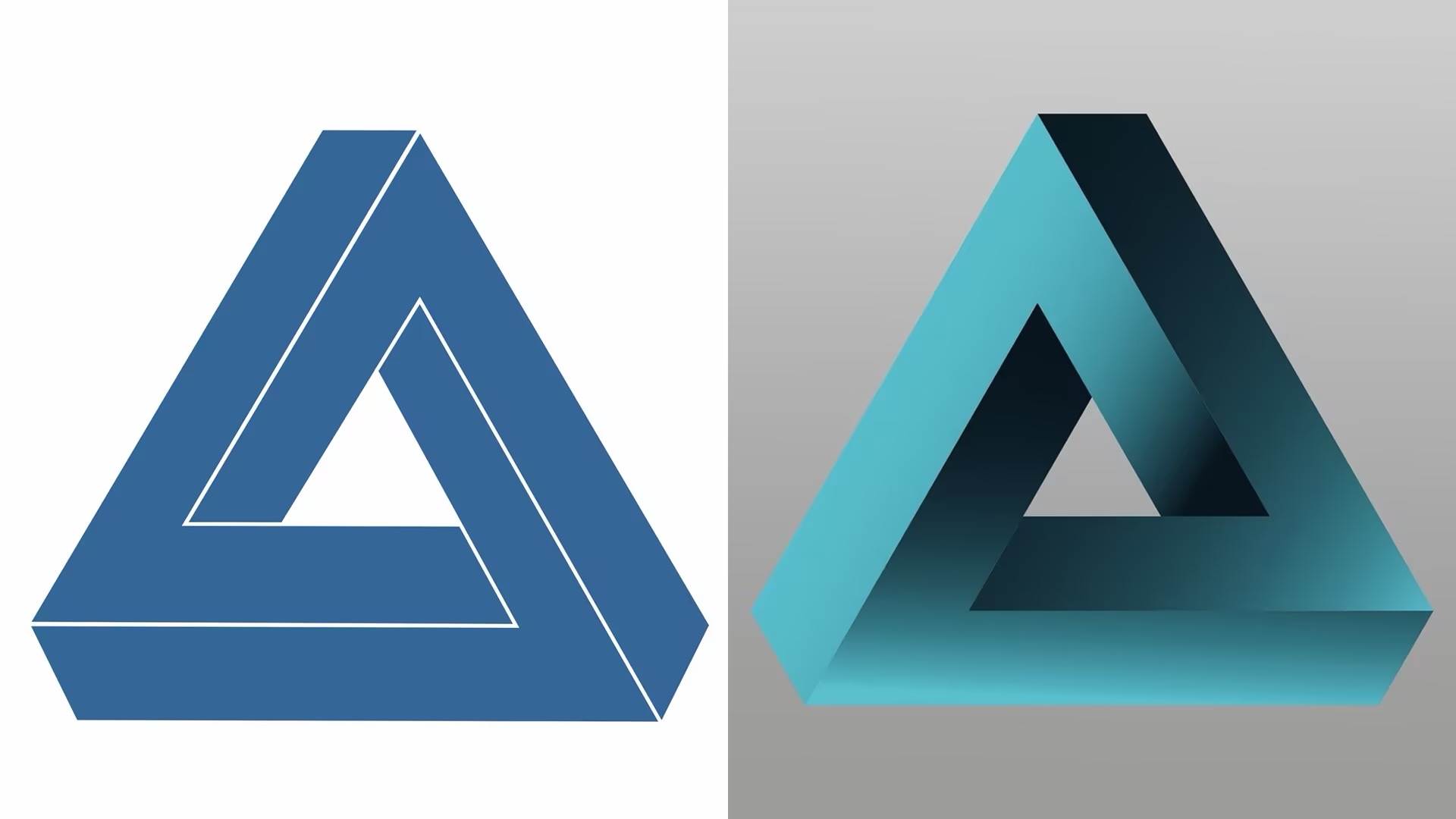
Understanding 2D and 3D Logo
A 2D logo is a flat design without any depth. It can be of any color, shape, or even texture. The flat logo mostly includes text elements. For each element of the logo to show clearly, it is designed with gradients and multiple angles. The simplicity of this static logo makes it easy to remember.

Conversely, a 3D logo consists of a third dimension that creates depth for the logo. It is similar to the 2D logo because it can be of any shape or color. Special effects include more details that make the logo more distinct than the 2D logo.
It is created with different geometric shapes like a cube, a cylinder, a sphere, or even a non-geometric shape. In addition, for some designs, the 3D logo even allows rotation for viewing from different angles. This is why it is perceived to be more innovative for a brand presentation.

2D Logo Vs. 3D Logo: What is the Difference?
Understanding the difference in a 2D logo versus a 3D logo may be helpful to you in determining which one to use in your business. Here are the details.
Visual Impact
A 2D logo is a straightforward design with minimal details in it. This makes it easy to recognize, understand, and remember for the viewers. It creates a subtle brand image in the mind of the client. The logo itself is simple and gives a touch of professionalism.
Talking about energy and innovation, a 3D logo stands head and shoulders above the rest. It is believed to be more eye-catching simply because it has more depth. As the shadows and gradients are incorporated into the logo, the 3D logo offers a much more dynamic experience..
Cost
A critical point to consider, particularly for small-scale businesses, is the cost. A 2D logo is easier to make, taking less time as well. Thus, it is a relatively budget-friendly option to use when launching the brand. It can be even created through an AI logo tool at the convenience of your home.
A 3D logo is more complex, and the design requires advanced editing. Hence, it is also more time-taking. Due to these factors, 3D logos are expensive.
Versatility
Another significant strength of a 2D logo is that it is versatile. A 2D logo is flat. It fits perfectly for mobile phones, smartwatches, or large screens. Even for social media apps and prints, the logos remain clear irrespective of their size. In addition, it can be easily pressed onto packaging without losing visual consistency.
In contrast, a 3D logo works well for ads or reels. When used in smaller sizes, such as for brand profiles on social media, it loses its fine details. Consequently, it is more compatible with large displays and prints. Rather than an icon, their depth makes them perfect for motion graphics and brand unveiling videos.
User Engagement
For storytelling through motion graphics, a 3D logo offers greater potential to achieve a higher user engagement. At first glance, it can gain the viewer’s attention more quickly than a 2D logo. Its dimensionality grabs attention quickly. By creating a sense of depth, realism, and modernism, a 3D logo provides an interactive digital experience.
A flat logo looks timeless. It supports faster brand recognition. However, it is preferred for static use only, such as for profiles and icons. For brand introduction through videos, it looks basic and fails to grab attention.
Emotional Resonance
While analyzing the already existing brand logos, audiences find the brands with simple yet composed 2D designs clean, authentic, and reliable. They produce a calm impact on the mind of the audience. This fosters trust and a strong connection between the brand and the audience.
In contrast, 3D logos evoke energy. It resonates with the audience who respond to a dynamic visual experience. An exciting brand logo appeals to the audience who value engaging brand designs.
Quick Comparison
Feature | 2D Logo | 3D Logo |
Brand Image | Classic and Timeless | Modern and Innovative |
Visual Impact | Simple, easy to remember | Enables an immersive user experience |
Cost | Cost-effective | Expensive |
Visibility | High resolution in any size | Reduced visibility for mobile apps and print media |
Versatility | Highly versatile for social media, print media, and mobile apps | Better for large screens |
Digital Presence | Maintains visual consistency and clarity across all digital interfaces | Creates a strong visual impression through depth and motion |
Best for | Minimal branding and multi-platform use | Innovative industries like tech and entertainment |
How to Choose Between 2D and 3D Logo
The logo is the first impression for your brand towards your target consumers. Hence, your design should be distinctive among those of your competitors. Some points to consider in making your decision are listed below:
Objective: Using a 2D logo design is appropriate for brands whose ultimate goal is to create a classic and straightforward brand identity. For innovation, modernism, or digital storytelling, 3D logo designs would be a good fit.
Target Audience: Target audience awareness plays a crucial role in enhancing brand growth. A 2D logo will attract viewers who appreciate the simplicity and sophistication. A 3D logo will target the tech-savvy audience who consume content with motion graphics.
Primary Platforms: The 2D logo can be very effective for multi-platform use such as social networking sites and mobile applications. The 3D logo is ideal on the interactive media platform for motion-based ads and reels.
Budget and Timeline: In case you have limited time and budget, then choose the 2D logo design. It takes advanced designing technology for 3D logo designs which can be expensive and time-consuming.
Industry Trends: Analyze the trend of your relevant industry. Depending upon the needs, some industries favor 2D logo designs while tech-based industries prefer 3D designs.
What are the Current Trends?
The trend of choice between a 2D and 3D logo keeps changing. Each industry has its distinct requirements that heavily impact its preferences. With the rapid rise of AR and VR technology, the shift is greatly towards the 3D logos. They have motion, texture, and the ability to grab instant attention.
Rather than just aesthetics, they are now functional for digital spaces. Many brands are using 3D logos for the introductory videos and interactive advertisements. Rather than combining the results from the 3D logo, a mixed strategy appears to be the current trend. Now, brands favor flexibility. Depending on your brand’s niche and audience, you might need logo variations that go beyond generic layouts. For instance, sports teams and competitive leagues often benefit from specialized designs—an AI cricket logo maker can help quickly generate bold, team-centric logos that stand out on uniforms, social media, and merchandise.
They use a flat logo design as their core identity. A 3D logo is used as a secondary logo to create an immersive visual experience for the audience through storytelling. Instead of a clearly preferred option, a trend towards finding a balance between clarity and creativity is being observed.
Conclusion
Whether to opt for a logo in 2D or in 3D may not be a one-size-fits-all scenario. This may differ based upon the intention, requirements, as well as corresponding trends in particular industries. Rather than solely relying on one design only, smart brands have found a balance.
When the need is versatility and speed, go for a 2D logo design. This will remain the core branding image for you. It will be applicable for immersive campaigns and storytelling purposes. This will help you to develop an impressive branding image with both simplicity and modernism in harmony. This will be possible through 3D design.
FAQs
1. Are 3D Logos Better than 2D Logos?
This would, of course, be dependent upon the goals or target audience of your brand. A 2D logo is better to use across a wide number of platforms. It showcases simplicity and authenticity. In contrast, a 3D logo is best used in digital spaces where one is bound to provide an immersive experience.
2. Which is the Best Logo Type for a Small Business?
A small business can initially start with a 2D logo design. It is a cost-effective option. Moreover, it can be used for both digital and print media. After creating a good foundation with 2D designs, you can try 3D designs to give your brand a contemporary look.
3. Is a 3D Logo Better for Social Media?
Neither a 3D nor a 2D logo is better for social media. The choice mainly depends upon the purpose of using a logo. For static use like profile icons, a 2D logo is the best. It provides clarity regardless of the size. For motion graphics and unveiling videos, go for a 3D logo design.