
Poster vs. Flyer: Key Differences Every Marketer Should Know
Every marketing company understands the importance of different marketing materials. They come in all shapes and sizes. However, the two most common tools include posters and flyers. When you see them first, they might seem the same. They aim to grab attention and deliver a message. But still, they satisfy distinct purposes. They follow different design strategies and distribution methods. Generally, posters dominate the spaces visually to create a lasting impression. And a flyer provides a more personal and hand-delivered touch.
The real answer to the battle “poster vs. flyer” is learning when to use which one. Many professionals are doubtful about the topic. Let’s explore it all!
What Is a Poster?
In simple terms, a poster is a visual communication tool. Marketers use it to convey a message quickly and effectively. A poster combines the imagery, typography, and design elements. All the elements work together to capture the target audience's attention.
Usually, a poster gets displayed in public spaces. The area where a wider audience can notice it. This is an essential marketing element for businesses and events seeking to capture interest and leave a memorable impact.
Some top uses of posters:
It promotes events like concerts and exhibitions.
It is helpful to run advertisements and campaigns.
Companies also use it to announce discounts or special offers.
A few characteristics of posters:
These are eye-catching marketing materials.
A poster includes minimal text with a direct message.
Large in size and thus visible from a distance.
Advantages of posters to note:
High visibility to get the attention.
Super effective for brand awareness.
One of the cost-effective options.
Easily flexible from a design perspective.
Instantly communicates the message without detailed reading.
What Is a Flyer?
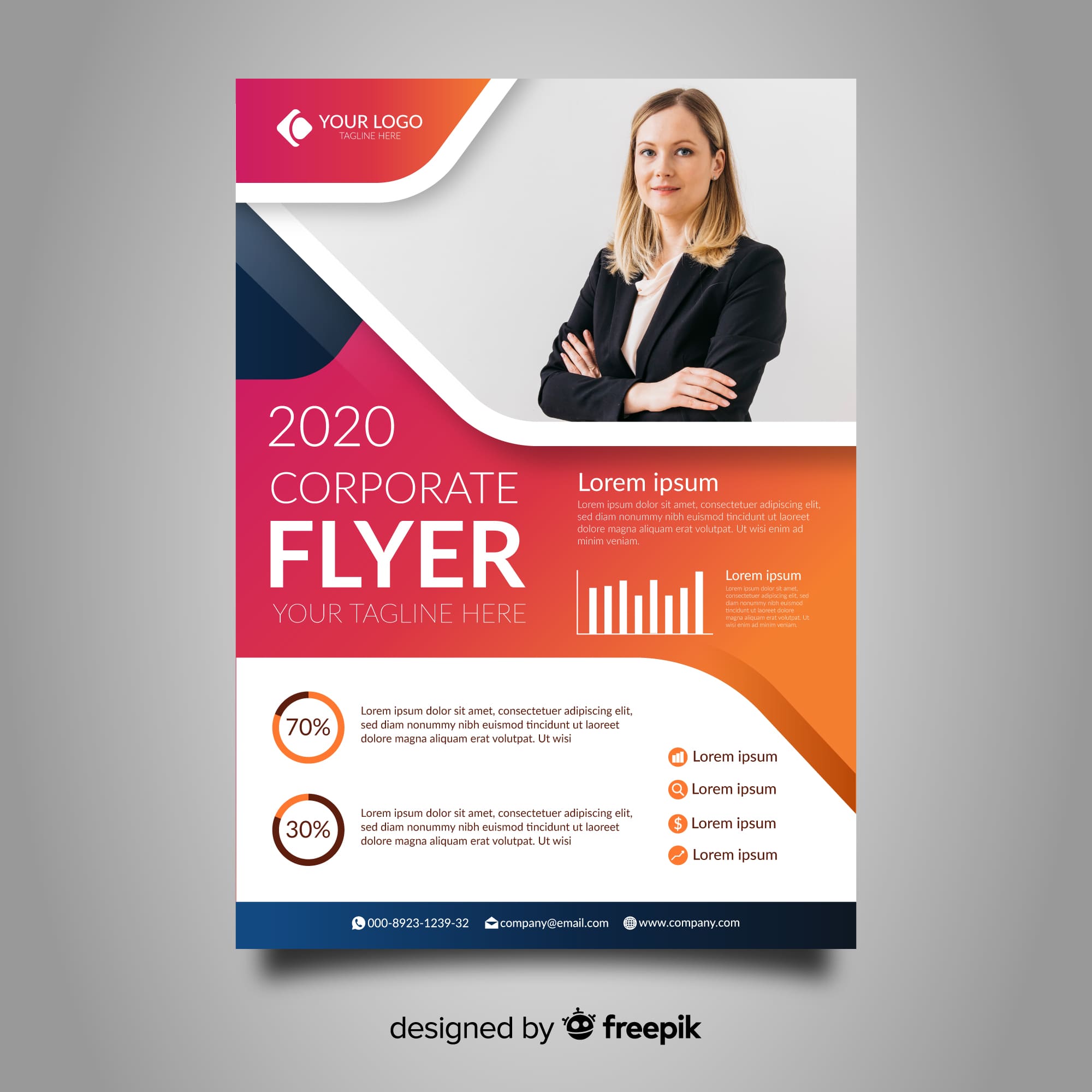
Another essential marketing design element is a flyer. It is a single-page piece of printed material that conveys a specific message instantly. These are not like posters. So, a flyer doesn’t rely on visual impact. It focuses on providing detailed information in a compact format. The flyers are usually a versatile tool. They can be used for individuals and firms.
Additionally, they can target the audience directly. A flyer is distributed by hand. The distribution also includes making or planning strategic locations. You can plan thoroughly to achieve maximum engagement.
Typical Uses of Flyers:
You can use a flyer as a handout at events and trade shows.
These can be used in direct mail campaigns targeting specific audiences.
A company can use these to announce new products or share other news.
Characteristics of Flyers:
These are compact and portable. It makes them easy to distribute.
It includes detailed information.
Usually combines text, images, and calls to action.
Advantages of Flyers:
Flyers are one of the most cost-effective marketing options.
These are easy to customize for different campaigns.
You can use them to reach the audience directly.
This element has the potential to drive immediate action.
These can be designed in many creative ways.
Key Differences Between Posters and Flyers

After the basic understanding of both, let’s jump into “posters vs. flyers.” The following information outlines the main differences between the two. Let’s shift the focus and choose wisely from among these.
Size & Visibility
POSTERS: These are large. A poster is designed to attract the eyes from a distance. Their use is ideal for high-traffic areas where visibility matters.
FLYERS: These are comparatively small. And you can hand them out easily. These are meant to be read up close. Their size makes them convenient to carry away after distribution.
Distribution
POSTERS: These are usually displayed in strategic locations. For example, walls, bulletin boards, or shop windows.
FLYERS: You can distribute them directly to people and mail them. An interesting part here is that you can leave them in specific locations for marketing. This difference affects the quick reach factor.
Information Density
POSTERS: A poster typically features a high percentage of visuals and bold headlines. It conveys the message quickly. More information is not present here.
FLYERS: However, flyers allow more text. It offers more detailed information with explanations. Discounts and calls to action are also there. It enables the audience to read at their leisure.
Cost & Production
POSTERS: A poster is often more expensive per piece. This is due to larger paper sizes and higher-quality printing.
FLYERS: On the other hand, flyers are comparatively cheaper to produce. It is especially the case when you do the print in bulk. So, these are ideal for budget-friendly campaigns for wider distribution.
Targeting & Audience Engagement
POSTERS: In terms of targeting, posters usually reach a broader general audience. This is ideal for brand awareness and public events.
FLYERS: In contrast, flyers are better suited to targeted engagement. These are easy to reach particular groups or locations where the audience may be willing to take an action.
When to Use Posters vs. Flyers
Now, you can imagine which can be useful for which purpose. Yes, posters and flyers are both marketing materials. But their goals are different. And the distinction is clear to you. But the question many may still have is, “When is the best time to use each?” So, quickly have a look at it!
Posters
You can see that these are useful for capturing your audience's attention. Please understand that they can help you build solid brand visibility. So, here are some ideas for you regarding when to use these:
Concerts
Product launches
Brand awareness campaigns
Store openings
Art exhibitions
Conferences
Community programs
Public announcements
Fundraisers
Promotional offers
Flyers
On the contrary, you can see that flyers are super compact. And their aim is to provide readers with detailed information. But when exactly is the occasion to use them? Have a glance at some common options:
Local advertising
Real estate listings
Handouts at malls
Restaurant menus or specials
Trade fairs
Community gatherings
Door-to-door marketing
Service introductions
Class or course promotions
Combining Posters and Flyers
Both posters and flyers work well independently. But when you use them together, it creates a stunning combination to reach the target audience in a more targeted way. Posters attract attention and build awareness. And flyers deliver your message directly to interested individuals. Thus, this pairing creates a complete marketing strategy.
Moreover, designing a poster and flyer becomes effortless with the right design tools. With the advent of AI, the design part actually gets faster. You can try X-Design’s Free AI Poster Creator and Flyer Generator. These are effective at creating the best designs with exceptional recommendations based on your requirement prompts.
Quick Design Tips for Posters and Flyers
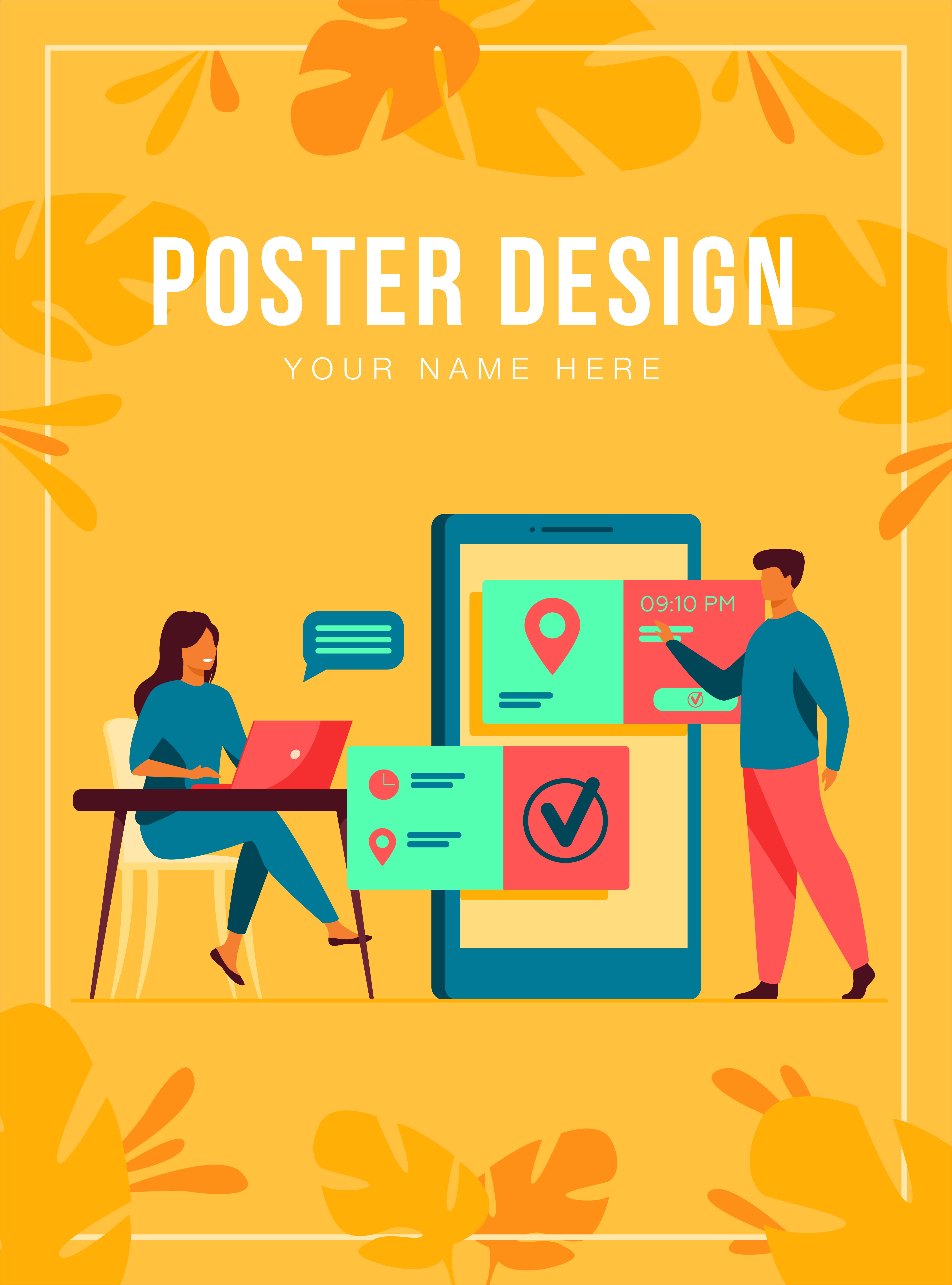
Design Tips for Posters
Some poster design tips can help you create the most attractive results. Check them out now to improve your designing game:
Eye-catching colors, bold headlines, minimal text: The first tip is about selecting the right elements. For example, pick the right font style and colors. It creates a significant impact. Besides, keep the headlines bold and use minimal text. Focus on a single, clear message that the audience can understand.
Use high-resolution images: Another beneficial tip is to use sharp and high-quality images. It will help to make your poster look more professional and credible. Please avoid the pixelated or low-resolution visuals. It can distract or confuse the viewers. Try to balance the visual with text. Don’t let it overpower.
Placement matters: One crucial part is getting the right placement for every single element. Consider the visibility scope from different distances and angles. You can ensure that your poster stays at eye level. Or it has to be readable. The proper placement will increase the attention possibility.
Design Tips for Flyers
Also, you may need some creative tips to design the flyers. The following are some effective ones to help you with the flyer design:
Clear Call-to-Action: It is an unavoidable tip for the flyer design. The call to action you use should stand out. It can be an encouragement to visit a website or attend an event. Or, it can be as simple as calling for more information. Ensure to make the CTAs bold.
Concise Yet Informative Content: The flyers provide detailed information without overwhelming readers. So, keep the message focused and highlight the main attractions. Try to create a balance between brevity and clarity.
Folded or Single-Page Formats: Flyers can be printed in different page formats. Pick a style based on your content. Single-page flyers are ideal for simple messages. On the other hand, folded flyers are good for neatly organizing multiple sections.
Conclusion
Finally, posters vs. flyers isn't the thing. It has to be posters with flyers for marketing success. The reason is that they have different agendas. Posters excel at grabbing attention. It creates a lasting visual impact. So, it is ideal for brand awareness campaigns. In contrast, flyers are ideal for direct distribution. They deliver concise messages that drive immediate action.
Therefore, both are impeccable tools serving unique purposes. It means marketers need to choose the right one for the target goals. After learning about everything, level up your marketing game and inspire engagement and results. If you want a tool to create any of the options, try X-Design’s Free AI Poster Generator and Flyer Creator. The AI-powered integration will save you time and effort.